Inside the disconnect on housing
[“ID”]=>
int(41445)
[“post_author”]=>
string(2) “36”
[“post_date”]=>
string(19) “2025-08-18 00:58:56”
[“post_date_gmt”]=>
string(19) “2025-08-18 00:58:56”
[“post_content”]=>
string(7682) “
At Isentia’s Beyond the Barossa panel, industry leaders from tourism, higher education, government, defence, and media came together to discuss how South Australia is being positioned, both to its own people and to the world. The discussion highlighted shared challenges, opportunities, and the essential role of communications in shaping South Australia’s identity.
South Australia’s brand: confidence and complexity
Chris Burford (South Australian Tourism Commission) outlined the dual challenge of building national and international awareness while fostering local pride. While South Australia currently ranks sixth of eight states on “appeal and consideration” as a tourist destination, it leads the nation in state pride. Events like Liv Golf and Gather Round have helped South Australians feel more confident about their state, and post-COVID reflections have driven a greater appreciation for the quality of life.
The SATC’s Celebrate the Simple Pleasures campaign reflects a move toward “place branding,” focusing less on iconic landmarks and more on the lived experience of being in South Australia. The research underpinning the campaign revealed a consistent theme: South Australians want the state to “grow but not change” embracing progress while retaining its distinct character.
Education and global perceptions
Djurdjica Arslanagic (Adelaide University) noted that Adelaide’s perception internationally has shifted from being seen as a regional city to a globally attractive destination for students. South Australia’s reputation as welcoming, safe, and supportive resonates strongly with international families making education choices. With the upcoming merger of Adelaide’s universities, communication is focused on tailoring messages to varied stakeholders, from students to alumni to government, ensuring consistency while meeting different needs.
Defence, industry and the workforce challenge
Sasha Meldrum (Nova Systems) discussed the enormous communications challenge posed by AUKUS and the scale of defence industry growth. With tens of thousands of workers required, from shipbuilders to nuclear scientists, attracting talent locally and globally will demand new policy approaches and fresh messaging. Meldrum emphasised that communicators must also help shift perceptions of defence, reframing it as not only about warfare but also about peacekeeping, security, and technological advancement.
Media fragmentation and targeted storytelling
Verity Edwards (Hughes PR) reflected on the contraction of South Australian newsrooms and the rise of alternative platforms. Traditional prestige outlets like The Advertiser still hold influence, but strategies now require targeting the right audience with the right medium. For some clients, industry publications or regional media can have far greater impact than mainstream outlets. Edwards highlighted the need for nuanced communication strategies that prioritise outcomes over exposure, and lateral thinking to match stories with audiences.
The climate story
A key challenge raised during the Q&A was South Australia’s ongoing algal bloom crisis. Burford noted its severe impact on coastal communities and tourism, with uncertainty around long-term recovery. He stressed the importance of communication grounded in science and transparency to maintain public trust, comparing the challenge to COVID in its unpredictability. The discussion highlighted how crucial clear, proactive communication is, both in explaining what’s happening and in shaping the narrative around next steps.
Key Takeaways:
- Confidence in identity – South Australians are more assured in their story, but lifting national and international visibility remains a priority.
- Nuanced storytelling – Different audiences, from universities to defence to tourism, require tailored approaches that balance authenticity with strategy.
- Collaboration – Industry, government, and academia must align communications to tackle workforce, economic, and reputational challenges.
- Think laterally – Success isn’t always about “big hits”; smaller, targeted placements often deliver the most impact.
Contact us to discover how communicators are navigating complex industries, engaging diverse audiences, and shaping stories that resonate. You can also watch the full panel discussion here.
”
[“post_title”]=>
string(68) “Beyond the Barossa: Communicating South Australia’s evolving story”
[“post_excerpt”]=>
string(0) “”
[“post_status”]=>
string(7) “publish”
[“comment_status”]=>
string(4) “open”
[“ping_status”]=>
string(4) “open”
[“post_password”]=>
string(0) “”
[“post_name”]=>
string(31) “strategic-storytelling-pr-comms”
[“to_ping”]=>
string(0) “”
[“pinged”]=>
string(0) “”
[“post_modified”]=>
string(19) “2025-08-19 21:55:54”
[“post_modified_gmt”]=>
string(19) “2025-08-19 21:55:54”
[“post_content_filtered”]=>
string(0) “”
[“post_parent”]=>
int(0)
[“guid”]=>
string(32) “https://www.isentia.com/?p=41445”
[“menu_order”]=>
int(0)
[“post_type”]=>
string(4) “post”
[“post_mime_type”]=>
string(0) “”
[“comment_count”]=>
string(1) “0”
[“filter”]=>
string(3) “raw”
}
Blog
Beyond the Barossa: Communicating South Australia’s evolving story
At Isentia’s Beyond the Barossa panel, industry leaders from tourism, higher education, government, defence, and media came together to discuss how South Australia is being positioned, both to its own people and to the world. The discussion highlighted shared challenges, opportunities, and the essential role of communications in shaping South Australia’s identity. South Australia’s brand: […]
[“ID”]=>
int(40160)
[“post_author”]=>
string(2) “36”
[“post_date”]=>
string(19) “2025-05-26 02:54:37”
[“post_date_gmt”]=>
string(19) “2025-05-26 02:54:37”
[“post_content”]=>
string(3706) “
Across the communications landscape, teams are being asked to do more with less, while staying aligned, responsive and compliant in the face of complex and often shifting stakeholder demands. In that environment, how we track, report and manage our relationships really matters.
In too many organisations, relationship management is still built around tools designed for customer sales. CRM systems, built for structured pipelines and linear user journeys, have long been the default for managing contact databases. They work well for sales and customer service functions. But for communications professionals managing journalists, political offices, internal leaders and external advocates, these tools often fall short.
Stakeholder relationships don’t follow a straight line. They change depending on context, shaped by policy shifts, public sentiment, media narratives or crisis response. A stakeholder may be supportive one week and critical the next. They often hold more than one role, and their influence doesn’t fit neatly into a funnel or metric.
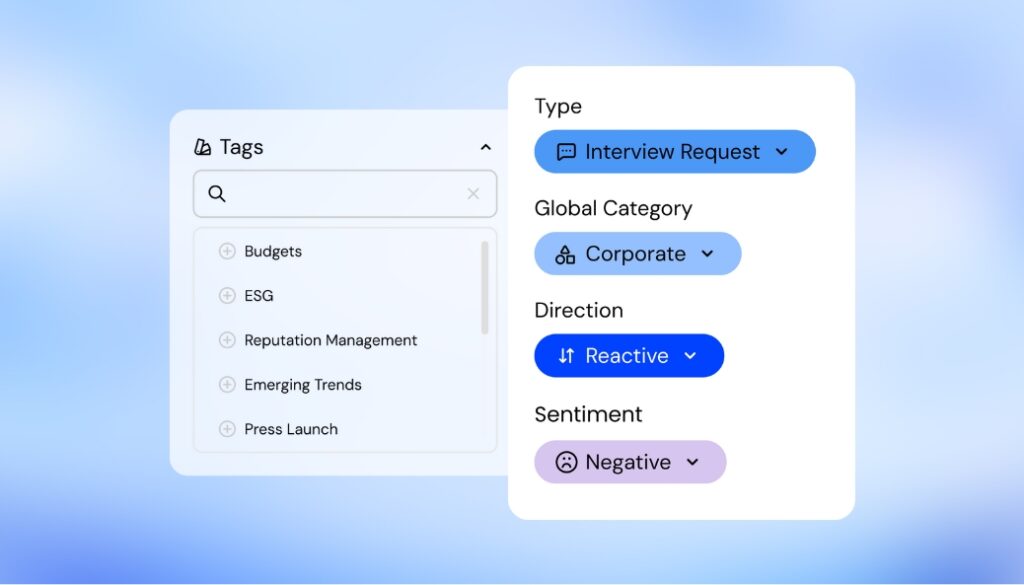
Managing these relationships requires more than contact management. It requires context. The ability to see not just who you spoke to, but why, and what happened next. Communications teams need shared visibility across issues and departments. As reporting expectations grow, that information must be searchable, secure and aligned with wider organisational goals.
What’s often missing is infrastructure. Without the right systems, strategic relationship management becomes fragmented or reactive. Sometimes it becomes invisible altogether.
This is where Stakeholder Relationship Management (SRM) enters the conversation. Not as a new acronym, but as a different way of thinking about influence.
At Isentia, we’ve seen how a purpose-built SRM platform can help communications teams navigate complexity more confidently. Ours offers a secure, centralised space to log and track every interaction, whether it’s a media enquiry, a ministerial meeting, or a community update, and link it to your team’s broader communications activity.
The aim isn’t to automate relationships. It’s to make them easier to manage, measure and maintain. It’s about creating internal coordination before the external message goes out.
Because in today’s communications environment, stakeholder engagement is not just a support function. It is a strategic capability.
Interested in how other teams are managing their stakeholder relationships? Get in touch at nbt@isentia.com or submit an enquiry.
”
[“post_title”]=>
string(52) “SRM vs CRM: which is right for PR & Comms teams?”
[“post_excerpt”]=>
string(0) “”
[“post_status”]=>
string(7) “publish”
[“comment_status”]=>
string(4) “open”
[“ping_status”]=>
string(4) “open”
[“post_password”]=>
string(0) “”
[“post_name”]=>
string(44) “srm-vs-crm-which-is-right-for-pr-comms-teams”
[“to_ping”]=>
string(0) “”
[“pinged”]=>
string(0) “”
[“post_modified”]=>
string(19) “2025-08-11 04:09:29”
[“post_modified_gmt”]=>
string(19) “2025-08-11 04:09:29”
[“post_content_filtered”]=>
string(0) “”
[“post_parent”]=>
int(0)
[“guid”]=>
string(32) “https://www.isentia.com/?p=40160”
[“menu_order”]=>
int(0)
[“post_type”]=>
string(4) “post”
[“post_mime_type”]=>
string(0) “”
[“comment_count”]=>
string(1) “0”
[“filter”]=>
string(3) “raw”
}
Blog
SRM vs CRM: which is right for PR & Comms teams?
Across the communications landscape, teams are being asked to do more with less, while staying aligned, responsive and compliant in the face of complex and often shifting stakeholder demands. In that environment, how we track, report and manage our relationships really matters. In too many organisations, relationship management is still built around tools designed for […]